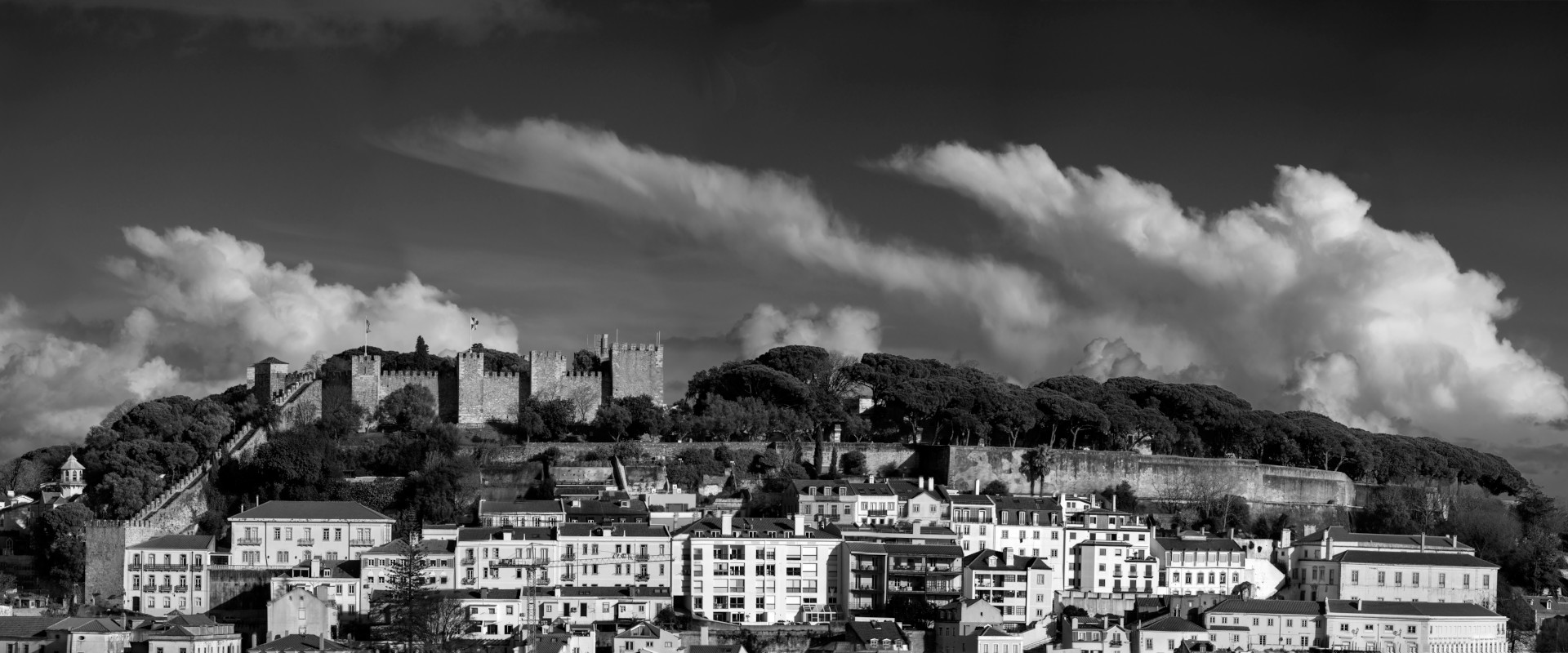
The Gates
Moniz Gate
Moniz Gate, also known as the Olival Gate, was one of the entrances of the Cerca Velha (Old Wall). Its name refers to the legend of Martim Moniz, who, according to tradition, is said to have used his own body to prevent the gate from being closed during the siege of Lisbon in 1147. The association of the gate with the knight is documented as far back as 1258.
At an uncertain date, the people of Lisbon erected a bust in his memory, which was complemented in 1646 with an inscription by the Count of Castelo Melhor, an ancestor of the legendary hero. The bust and inscription remain in their original location, although outside the visitor-accessible area of Castelo de São Jorge. In 1825, the gate was used by the 18th Infantry Regiment, which made use of the opening to install latrines.
Outside, an archaeological survey revealed the foundation of a tower north of the gate, as well as several layers of paving.
Traitor’s Gate
Hidden from view on the outside, this small gate led to a path descending the hillside towards the lower part of the city. Concealed by a protective wall, it allowed discreet entries and exits in times of danger. During the 1383–1385 dynastic crisis, supporters of Castile gained access to the Castle through this hidden entrance.
North Gate
Located on the northern wall, between the Cistern Tower and the Moniz Gate, this was likely one of the exits from the Alcáçova, remaining in use at least until 1650. During the works of 1938–1940, it was found almost entirely hidden by the small dwellings that had been built nearby. These were subsequently demolished, allowing the gate to be recovered. In 2014, due to the deterioration of the stone and mortar, a major conservation and restoration intervention was carried out.